Friday, 25 March 2016

Ancient Greek Sculpture

Today I felt like I wanted to focus on Ancient Greek sculpture. Greek sculptures are some of the most detailed sculptures I've ever seen. What I find most interesting though, is that once these pieces were full of colour.


What once might have been (Reconstructions)


Friday, 18 March 2016

Cardboard Art

Rather than focus on one artist I chose to share some particularly interesting pieces made from cardboard.


Thursday, 4 February 2016

Faberge Part 2

Yay! Time for more Faberge! Like last time, I've highlighted four to focus on for this post.

Winter


This egg was made in 1913 for Maria Feodorovna and was given to her by her son Tsar Nicholas II. The outside of the egg is decorated with 1,660 diamonds and the surprise, a flower basket, is studded with 1,378. This egg is one of the most beautiful things I have ever seen! It looks like it's crafted from pure ice and I love that the surprise is a flower basket because to me that represents spring coming after the winter. This egg reportedly belongs to the Emir of Qatar.

Steel Military

File:Faberge Steel Military.jpg

The Steel Military was made in 1916 and given to the Tsar's wife Alexandra Fyodorovna. The surprise is a miniature painting by Vassily Zuiev. This egg reflects the events going on with Russia at the time as they were involved in World War I when this egg was made. The Kremlin Armoury owns this egg.

Twelve Monograms

File:Twelve Monogram (Fabergé egg).jpg

Gifted in 1896 to the Tsar's mother Maria, this egg is decorated with the monograms of 'MF' for Maria Fyodorovna and 'AIII' for Alexander III. The surprise is missing. This egg is located at the Hillwood Museum in Wahington, D.C.

Rosebud

File:Rosebud egg.jpg

Alexandra received this egg in 1895 and was the first egg given to her. The egg opened to reveal a rosebud which contained the surprises. The surprises were a golden crown with diamonds and rubies and a cabochon ruby pendent, they are lost. The crown was a reference to Alexandra's new role as Empress of Russia after her husband's accession to the throne. The rosebud reminded her of the rose garden of Rosenhohe, Darmstadt in Germany where she was from. This egg is located at the Faberge Museum in Saint Petersburg, Russia.

Friday, 29 January 2016

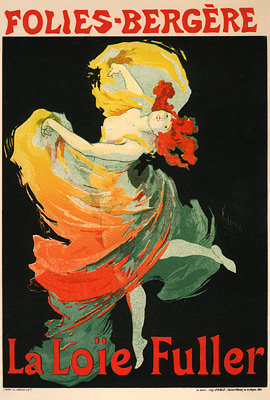
Deco and Nouveau

Art Deco and Art Nouveau are two styles of art that were popular in the early 20th century. It is my belief the two styles complement each other because they both have an aura of elegance to them reminiscent of a bygone era.

Art Nouveau came first and was popular from 1890-1910. I often associate with it women in flow-y sheets, surrounded by flowers or trees or general nature. I also think of swans. To me,
Art Nouveau seems like an artificial ode to nature in general. It sees the beauty in it, but it is glamourised rather than shown realistically.

Art Deco is what I call 'Gatsby Art' because it is evocative of the era in which 'The Great Gatsby' takes place. It was most popular following WWI until WWII so it spanned at least three decades. I prefer Art Deco but I like both-just Art Deco a smidge more. Where Nouveau seems to represent nature, Deco represents the city and metropolitan life in general.

Nouveau:
   File:Cheret, Jules - La Loie Fuller (pl 73).jpg

Deco:
File:Cochise County Courthouse Bisbee Arizona ArtDecoDoors.jpg File:Eastern Columbia Building entrance.jpg
File:Philips L1060854.jpg 

Friday, 22 January 2016

High Relief Sculpture

High relief sculpture is a type of sculpture where half of the figure is raised above the base and half remains flat. I call it 3D meets 2D.
Here's some cool examples:
 This one is really cool-it's like it's leaping out at you.


Saturday, 16 January 2016

The Faberge Egg

The Faberge Egg was a particular type of jeweled egg made by Peter Carl Faberge and his company. They are most known for providing the jeweled creations for the Russian Tsars Alexander III and Nicholas II who gave them as Easter gifts to their loved ones. Alexander III gifted them to his wife Empress Maria Feodorovna and after his death their son Nicholas II continued to gift them to her as well as his wife Empress Alexandra Feodorovna. 50 eggs were made in total and 43 exist today, two more were planned but never delivered because of the Russian revolution. Like most Easter eggs many contained surprises inside them. Today the surviving eggs are placed in various collections with most being at the Kremlin Armoury in Moscow, Russia. Other eggs belong to the Royal Collection in London-the art collection of the British Royal Family, the Prince of Monaco's collection, and The State of Qatar. The eggs are exquisite and I could spend hours talking about them but for now I'll highlight four. I may highlight others in future blog posts.

First Hen Egg or Jeweled Hen Egg

File:Яйцо "Курочка".JPG

The very first Faberge Egg given to Empress Maria from Alexander in 1885. The egg opened to reveal the golden yolk seen here which then opened to reveal the golden hen. The hen opened to reveal a diamond and gold crown which contained a ruby pendant. The crown and pendant are missing. The egg is owned by Viktor Vekselberg and has been since 2004.

Moscow Kremlin

File:Moscow Kremlin Egg.jpg

Gifted to Empress Alexandra in 1906 this egg is among the few that has never left Russia. The base of the egg contains a music box which served as the surprise. This egg fittingly belongs to the Kremlin Armoury.

Alexander Palace

File:Alexanderpalace egg 01 by shakko.jpg

This egg is a favourite of mine because it represents the Tsar's family. Given to Alexandra in 1908, this egg contains on the outside miniature watercolour portraits of  their children: Olga, Tatiana, Maria, Anastasia, and Alexei. Above each portrait is a diamond initial for each child's first name and inside the egg on the reverse of the portraits are their dates of birth. Alexandra's initials 'AF' are also represented in diamonds. The surprise of this egg is a miniature Alexander Palace. This egg also belongs to the Kremlin Armoury.

Constellation

File:Constellation Faberge egg 03 by shakko.jpg

This was the final Imperial Faberge Egg. It was never finished or delivered to Alexandra because of the revolution. Two eggs claim to be the Constellation, one-pictured here-is held in the Fersman Mineralogical Museum another claiming to be the original-as well as finished egg-is owned by Alexander Ivanov who holds his egg in the Faberge Museum. Engraved on the egg is the astrological sign Leo which was the heir to the throne, Tsarevich Alexei's sign-as well as mine. There are also stars marked by diamonds and a clock mechanism inside.

Faberge Eggs are a relic from a foregone era that live eternally through the grandeur they left behind. Despite the efforts of the Bolsheviks the beauty of Imperial Russia lives on and the Imperial Family does as well.

Nicholas II of Russia: 6 O.S./18 N.S. May, 1868-17 July, 1918 (aged 50)
Alexandra Feodorovna: 6 June, 1872-17 July, 1918 (aged 45)
Olga Nikolaevna: 15 November, 1895-17 July, 1918 (aged 22)
Tatiana Nikolaevna: 10 June, 1897-17 July, 1918 (aged 21)
Maria Nikolaevna: 26 June, 1899-17 July, 1918 (aged 19)
Anastasia Nikolaevna: 18 June, 1901-17 July, 1918 (aged 17)
Alexei Nikolaevich: 12 August, 1904-17 July, 1918 (aged 13)

Footwear

Protecting our feet doesn't seems like a particularly interesting thing but footwear varies from place to place and across time. Here are some of the most interesting shoes:

 File:Dutchclogs.jpg 'Klomp' or it's plural form 'Klompen' common Dutch shoe

 Japanese 'Geta' a mix of clogs and flip-flops

File:HJRK A 62 - Armoured shoes of Maximilian I, 1485.jpg
'Sabaton' a type of shoe that covers a Knight's foot and is part of his armour. These belonged to Emperor Maximilian I of the Holy Roman Empire.

File:Russie.jpg A Russian soldier on skis wearing the Russian winter boot 'Valenki' basically felt boots.